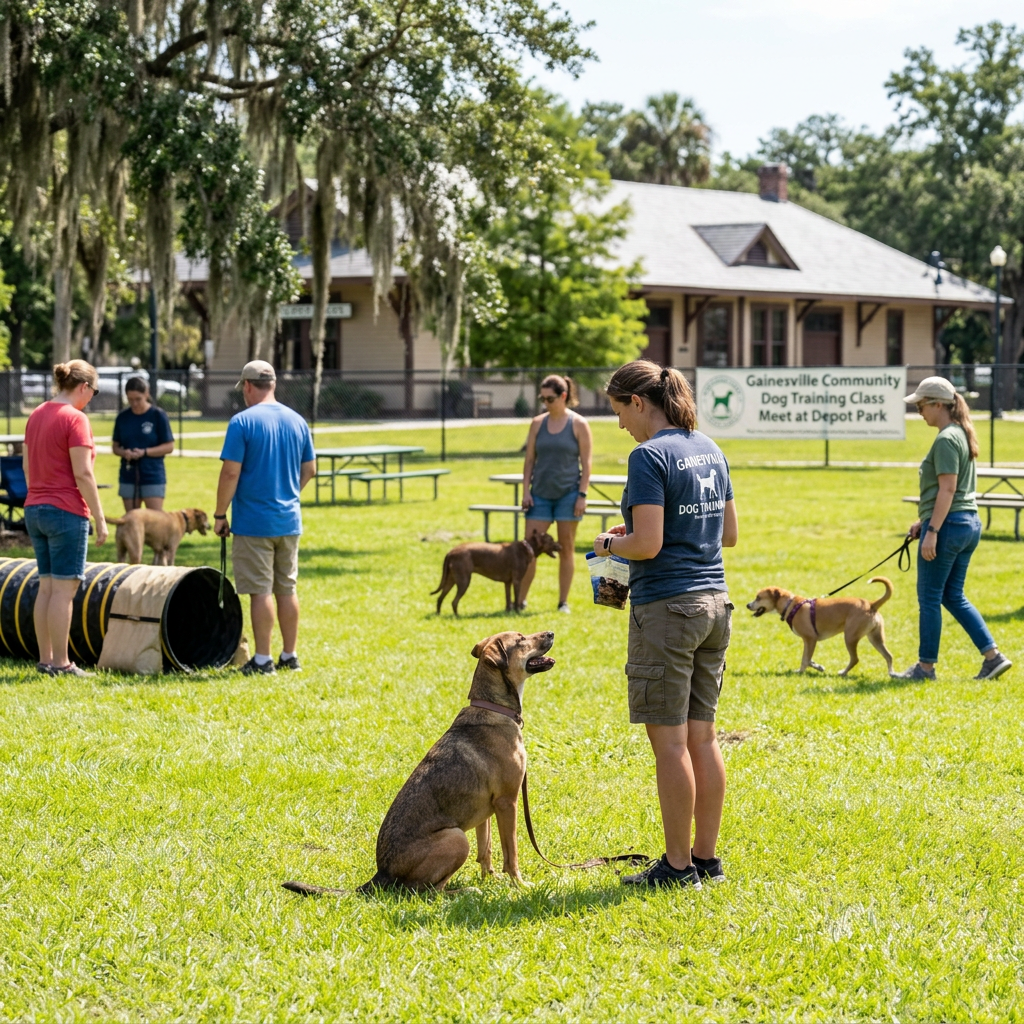
Picking the best dog trainer isn’t about who talks the biggest game—it’s about who can answer the hard questions clearly. Whether you need basic dog training or true dog behavior modification, the right program should have a plan, a process, and real-world proof.
In dog training Gainesville FL, results should show up outside the living room. That means your dog can listen in Archer, settle in Arredondo, walk past distractions in Jonesville, and stay neutral in Millhopper—not just “sit” in a quiet kitchen.
1) What results should I expect in real life—not just at home?
A good trainer should explain how they proof behaviors around real distractions: people, dogs, bikes, squirrels, doorbells, and busy sidewalks.
Listen for: a clear plan to practice in public, not just private sessions.
2) How do you measure progress (and what are the milestones)?
If you’re paying for training, you deserve a roadmap. Ask what success looks like at week 1, week 3, and week 6.
Listen for: specific milestones like loose-leash walking, place/settle, recall basics, and calm neutrality.
3) What’s your process for reactivity and aggression cases?
If you’re dealing with reactivity, you need safety, structure, and a trainer who can explain risk management. For aggressive dog training, “we’ll fix it” isn’t a plan.
Listen for: management steps (muzzle conditioning, distance work), controlled setups, and clear owner rules.
4) What training methods do you use—and why?
Every trainer has tools and techniques. The key is whether they can explain them clearly and match the approach to your dog.
Listen for: a balanced, dog-specific plan—not a one-size-fits-all pitch.
5) How do you handle setbacks?
Behavior change isn’t a straight line. The best trainers expect bumps and have a troubleshooting process.
Listen for: “Here’s what we do when the dog regresses” and how quickly they adjust the plan.
6) What do you need from me at home?
Training doesn’t stick if the family isn’t consistent. Ask what your role is and how much time you’ll need daily.
Listen for: simple homework, clear rules, and realistic expectations.
7) Do you provide support between sessions?
This is where a lot of programs fail. You’ll have questions when you’re actually living with the dog.
Listen for: texting support, quick check-ins, or a clear way to get help when something pops up.
8) Where do you train—and will my dog practice in different environments?
A dog that listens only in one place isn’t truly trained.
Listen for: training in multiple locations and gradual distraction proofing.
9) What does your program include (and what costs extra)?
Ask what’s included: follow-ups, refresher sessions, group work, equipment, or boarding/daycare add-ons.
Listen for: transparent pricing and no surprise fees.
10) Can you show proof—reviews, case studies, or before/after examples?
You’re not looking for perfection—you’re looking for consistent results and honest communication.
Listen for: real examples, realistic timelines, and reviews that mention support and follow-through.
Bonus: Can daycare or boarding help reinforce training?
Some families pair training with structured dog daycare (or dog day care Gainesville FL) to keep routines tight and build neutrality around other dogs.
If you need travel coverage or extra structure, dog boarding Gainesville FL can also help maintain consistency—when it’s trainer-led and behavior-focused.
Final thoughts: ask the questions that protect your time (and your dog)
The right trainer won’t dodge questions. They’ll welcome them—because clarity upfront saves you months of frustration later.
If you’re looking for dog training Gainesville FL and want a plan built for real life, reach out and tell us what you’re dealing with. The more honest you are, the better we can help.
 Dog Training Near Me
Leave a comment